
Super User
Welcome to MICS!
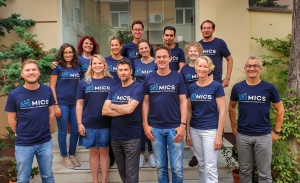
MICS is a new project to measure the impact of citizen science which received two million euros of funding from the European Commission. The project started in January 2019 and involves six European partners from five countries. Luigi Ceccaroni, the project’s Scientific Coordinator, explains the idea behind the project:
To understand the importance of MICS, let's think for a moment about consumers in our current society. If we believe that we are just “consumers”, we focus our attention on “price” and we forget about other issues, for example the ones related to the environment. But when we think of ourselves as citizens, our interests change and we start thinking in a broader way leading us to ask specific questions. How can citizens express their voice on these specific questions? For example, about food. Big and serious questions about food need our attention. What is the relation between the food we eat, the status of the environment, the quality of freshwater? Who decides the food policy or the environmental policy, in Europe or in each of our countries? The answer is maybe some obscure expert easily influenced by the industry lobby. Alongside those experts and interest groups, policymakers should engage citizens and communities (much more than they currently do). And policymakers can only take citizens' views into account if they know what these views are and if people have had a real and meaningful opportunity to define and explore the issues, give voice to their concerns, understand the implications of the decisions they make, and come to terms with the choices required. We need to think afresh about our policies, about our environmental policies, about the food, the water. We need to do it based on evidence and science. The governments, the experts, the citizens, together. This is citizen science. We need to understand its impact; we need to measure it. And then we need to use it. Wisely.
In MICS, we´re working on a toolbox for project leaders, for them to quantify the impact of their projects, and for citizens, for them to understand the impact of their projects. And we already know that we´ll face a challenge – making the toolbox appealing to use. We’ll make the quantification of impact fun, and relevant for every project using the toolbox and, above all, we’ll make it useful for society and policy makers. MICS will not look like a survey from the 90s. We want to make it beautiful, interesting and high-quality.
But, why a toolbox for measuring the impact of citizen science? Everybody already has access to public data on citizen-science projects: there are databases and repositories collecting and sharing these data, and even efforts to standardise them are under way. But impact? The Commission has invested several tens of millions of euros on citizen science in the last seven years, but nobody has a clue of the impact generated by this significant investment. We want to start to quantify this impact and we want everyone to have easy and convenient access to the results. And for these results to be useful, we are working both on the high quality of the MICS toolbox itself and of its content, and on the algorithms analysing the data collected about the projects.
At the moment, the MICS team is about 20 people working part-time on the project. The whole project is paid for by the European Commission. We have small and large national and international institutions and organisations behind us, and above all we have our enthusiasm and passion for citizen science and the environment. We are not independent but, this being a research project, science comes first and pleasing those big institutions is not a necessity.
The second MICS plenary meeting
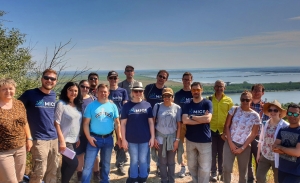
The MICS project launched with a kick-off meeting in January 2019. In July, the team came together again, this time in Romania, to discuss the progress in the project so far and plan our next steps. The MICS workplan sets out four main focuses for the project: 1) developing methods for measuring citizen science impact; 2) creating toolboxes for decision makers, citizens and researchers; 3) establishing four citizen science projects; 4) disseminating the results from the project. During the meeting in Romania, we heard from each of these “work packages”.
IHE Delft leads the team developing the methods for measuring the impacts of Citizen Science initiatives. So far, the team has focused on scoping this effort, creating the methodology for developing the impact assessment framework and planning the testing of the impact assessment framework by the MICS case studies and beyond. Overall, MICS is suggesting a three-pronged approach to capturing the impacts of Citizen Science: 1) by means of Impact Stories (in close collaboration with the work of the WeObserve Community of Practice on value and impact of CS for governance; 2) the MICS Impact Assessment Framework which will be available in due time on the MICS online platform; 3) in-depth case studies. Aside from literature reviews and an empirical workshop at the River Restoration Centre Annual Conference (led by Earthwatch), the MICS Advisory Board has also provided useful feedback on the progress so far.
The River Restoration Centre leads the development of four citizen science case studies in the UK, Romania, Italy and Hungary. During the plenary meeting in July, the MICS team visited the Romania case study to see the creation and connection of the Carasuhat Wetland to the Danube River, and hear from local citizens about the project. They explained how the wetland has created new habitats and is supporting sustainable ecotourism activities. These citizens are now going to be involved in the co-design of citizen science activities to monitor environmental quality of the wetland. This was a great trip and highlighted the importance of citizen involvement in the development and monitoring of nature-based solutions.
The next challenge for the project will be initiating the co-design of the citizen science activities at our four case-study sites. Successful co-design is not always easy but we will follow best practice, using a shortened version of the approach from the GroundTruth2.0 project (led by IHE Delft) which established six citizen observatories across Europe and Africa. We will also continue to develop the online toolbox, incorporating the work already done on the MICS approach to impact assessment.