
Editorial (3)
https://www.youtube.com/watch?v=bWrX7uSrjFo
Here we are: December. The fifth and final newsletter of the year. And what a year it has been! Global pandemic and national lockdowns aside, it’s been positively action packed. To summarise the last year, we’ve written the Twelve Days of MICSmas. Feel free to sing it rather than read it!
On the 12th day of MICSmas, the project gave to me:
12 months of hard work
11 citizen science project coordinators interviewed for their views on impact
10 citizen science workshops (four in Hungary, four in Italy, one in Romania, and one at the MICS plenary meeting at Cranfield)
9 projects in monthly SwafS calls
8 deliverables submitted*
7 reviewers engaged
6 partners collaborating
5 domains (economy, environment, governance, science and society) used to develop indicators of impact
4 case studies continuing with the co-design of citizen science
3 virtual conferences attended**
2 papers submitted to high impact journals
And a platform to measure impact
*by the end of December
**four by the end of today
You can watch members of the MICS team perform this Christmas carol here, if you’re in need of some festive cheer!
What is co-design?
Co-design aims to empower citizens to work with stakeholders and scientists to develop meaningful citizen science activities from the beginning of a project. This allows the creation of activities within communities with common interests helping to sustain longer-term citizen science involvement and impact because of the co-operative process. Under the guidance of IHE Delft, MICS adopts and applies the best practice generated by the Ground Truth 2.0 project in the co-design of citizen science. The co-design process involves a series of workshops with citizens and stakeholders to understand their views and interests. The first co-design workshop has taken place in the Italian and Hungarian case studies.
Further co-design sessions are being organised to explore the themes identified by the citizens and stakeholders, and to design the hands-on citizen science activities.
Understanding Impact
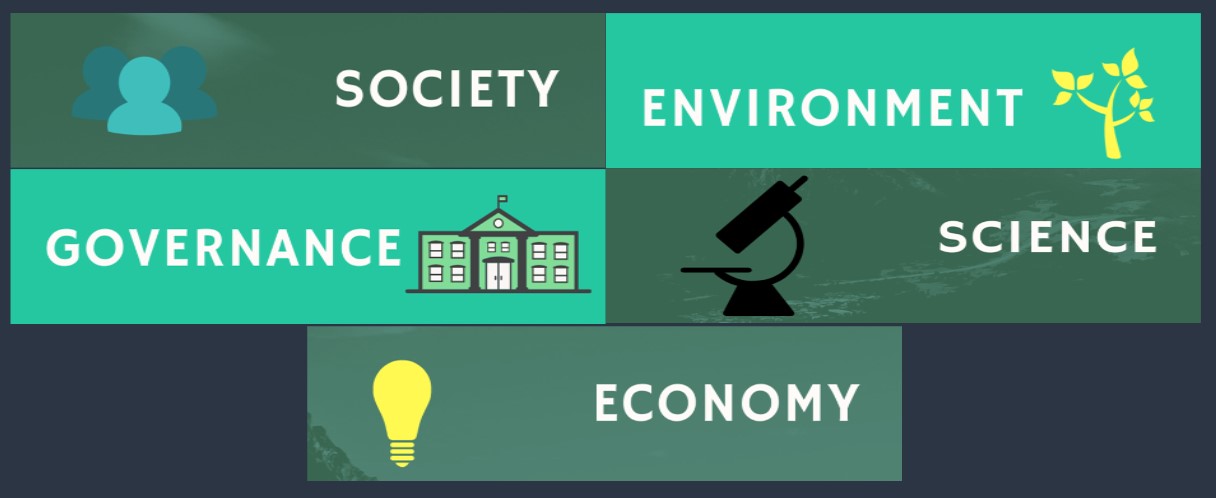
The MICS project explores the impact of citizen science activities on five domains – ENVIRONMENT, GOVERNANCE, SCIENCE & TECHNOLOGY, SOCIETY and ECONOMY. To develop a methodology to measure impact it is important to understand what people perceive impact is and how it manifests itself in citizen science activities. To do this, we invited citizens from the Outfall Safari citizen science project to a workshop to discuss their understanding and perspectives of ‘impact’.
What is Outfall Safari?
Outfall Safari is an innovative citizen science method for locating, assessing the impact of, and reporting on polluted surface water outfalls. Polluting surface water outfalls often occur when household appliances are incorrectly plumbed, ‘misconnected’, into surface water drains, which flow directly into rivers. Citizens use an app to score outfalls based on the appearance and flow. The polluting outfall scores are reported to local water companies who work to trace misconnected pipes to remedy pollution hotspots.
Since Outfall Safari began in 2016 over 200 citizen scientists have been involved in surveying over 150 km of rivers across Greater London. The project helps raise awareness of the issue, collect valuable data and helps water companies target efforts to reduce pollution and improve our rivers. Outfall Safari is one of the UK MICS case studies.
More information about Outfall Safari is here: www.catchmentbasedapproach.org/learn/outfall-safari-guide/
The workshop
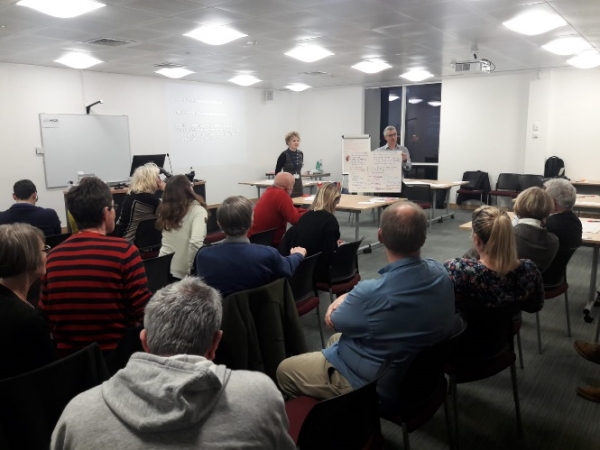
The MICS project partners joined with citizen scientists and the coordinator of the Outfall Safari project to discuss impact. The workshop began with an overview of the MICS project, followed by a presentation about Outfall Safari. This was a good introduction to set the context for the session. We then split into small groups to discuss the five impact domains.
What did we learn from the workshop?
We asked the citizens to write a summary sentence of the discussion related to each impact domain. The sentences provide an overview of the discussions -
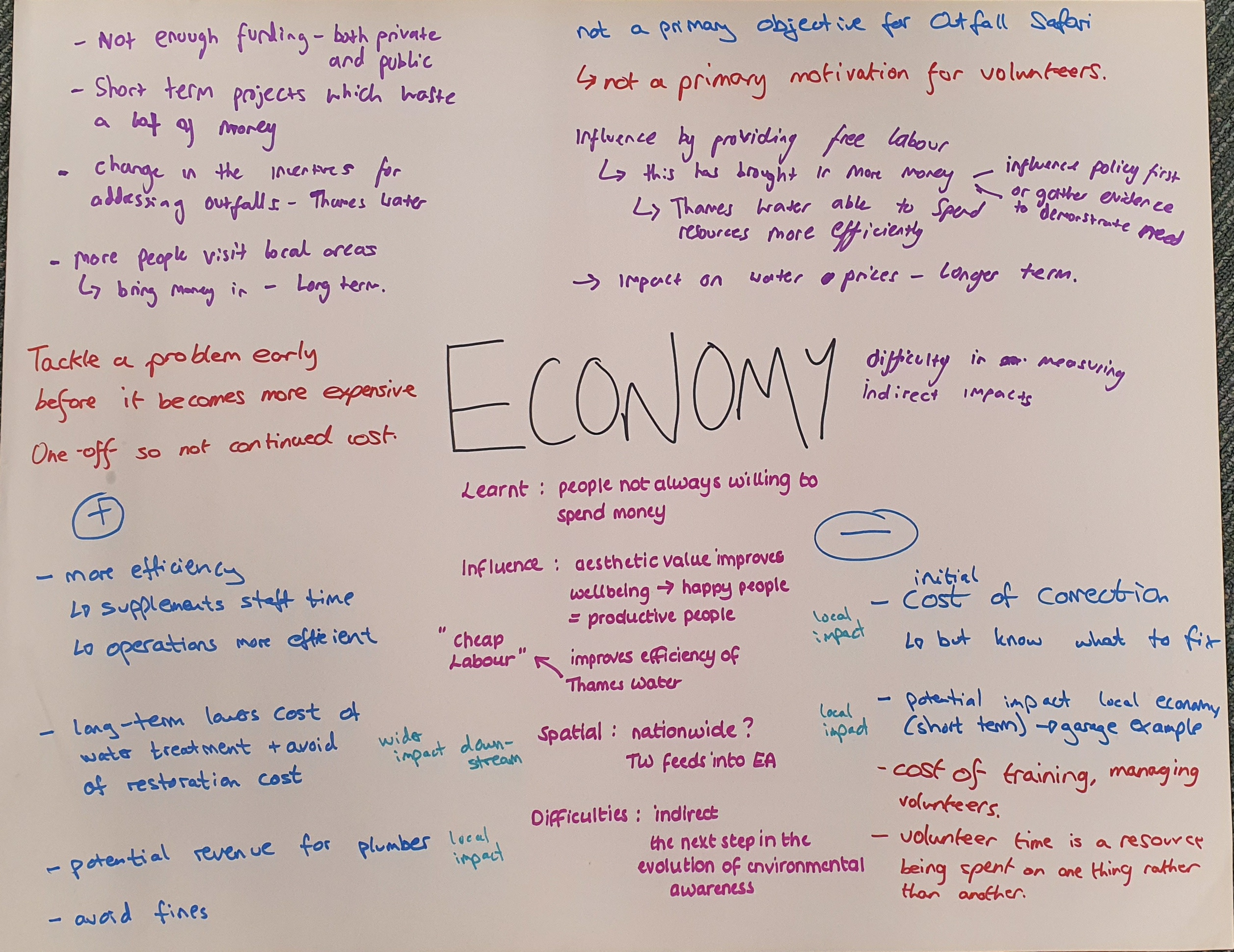
“Outfall Safari contributes to the ECONOMY by identifying problems early before the solution becomes more expensive, via cheap labour, although the reduction of economic costs is not a primary motive for the volunteers”
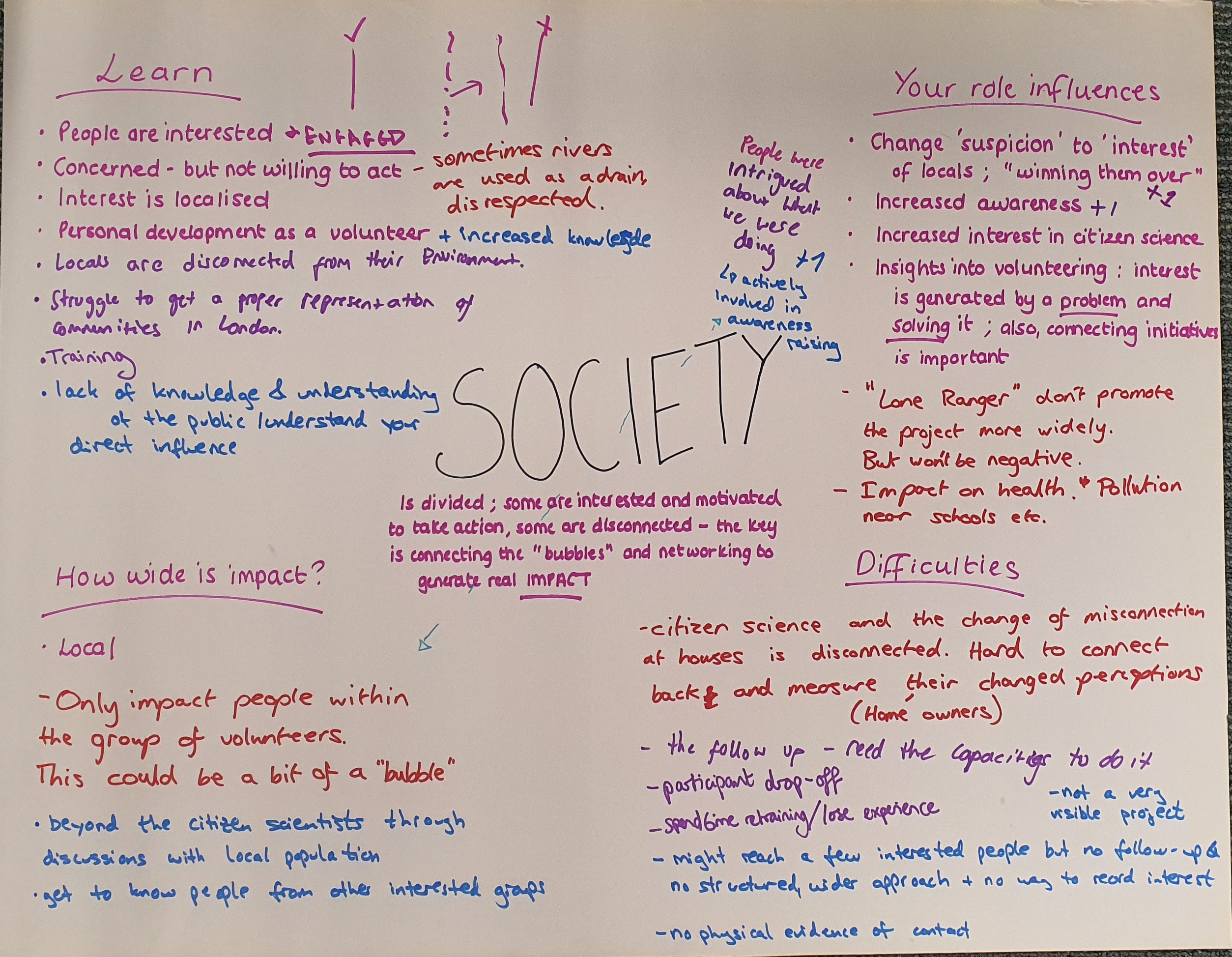
“SOCIETY is divided; some [citizens] are interested and motivated to take action, some [citizens] are disconnected – the key is to connect the “bubbles” and networking to generate real impact”
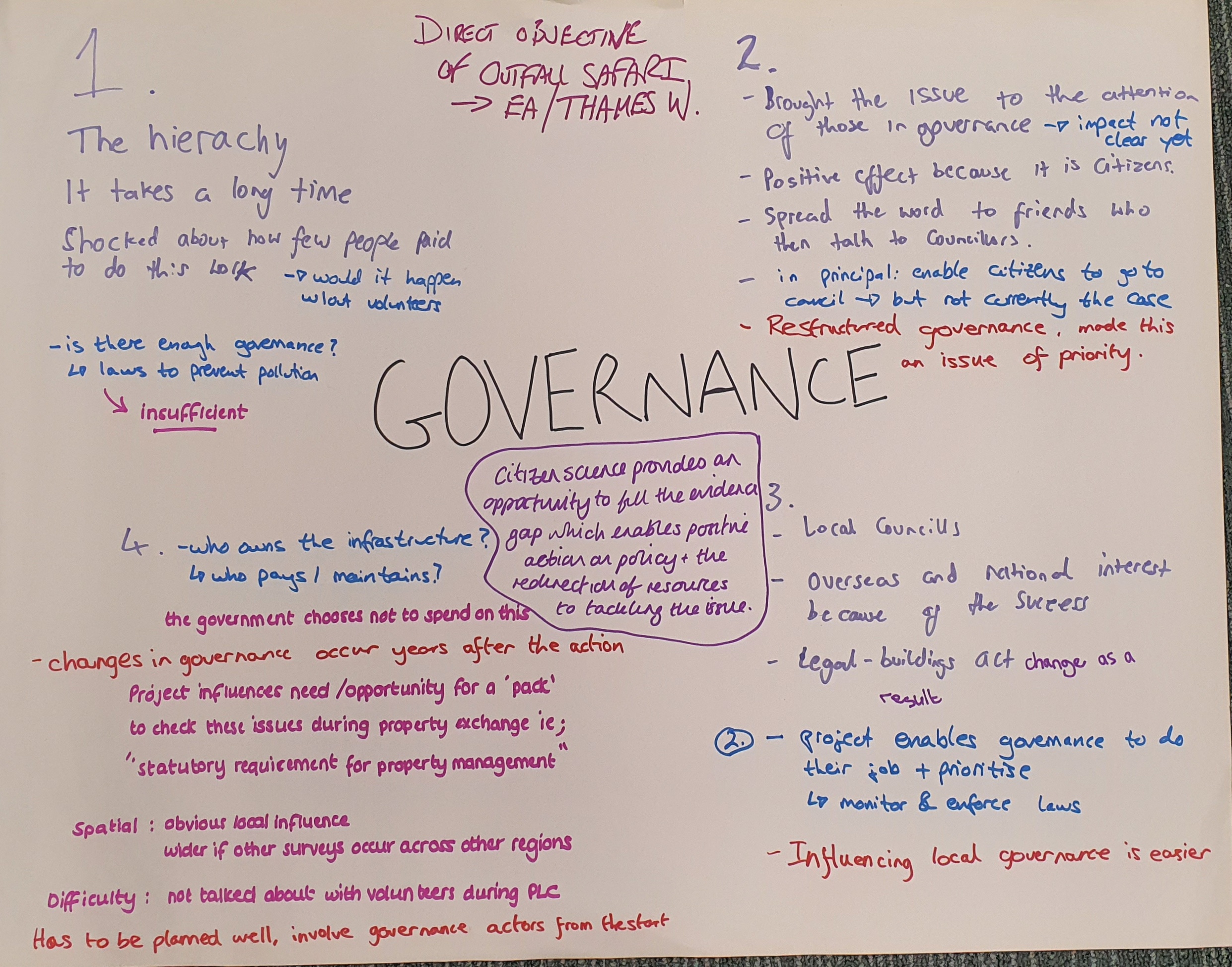
“Citizen science provides an opportunity to fill the evidence gap which enables a positive action on policy, GOVERNANCE, and the redirection of resources to tackling the issue”
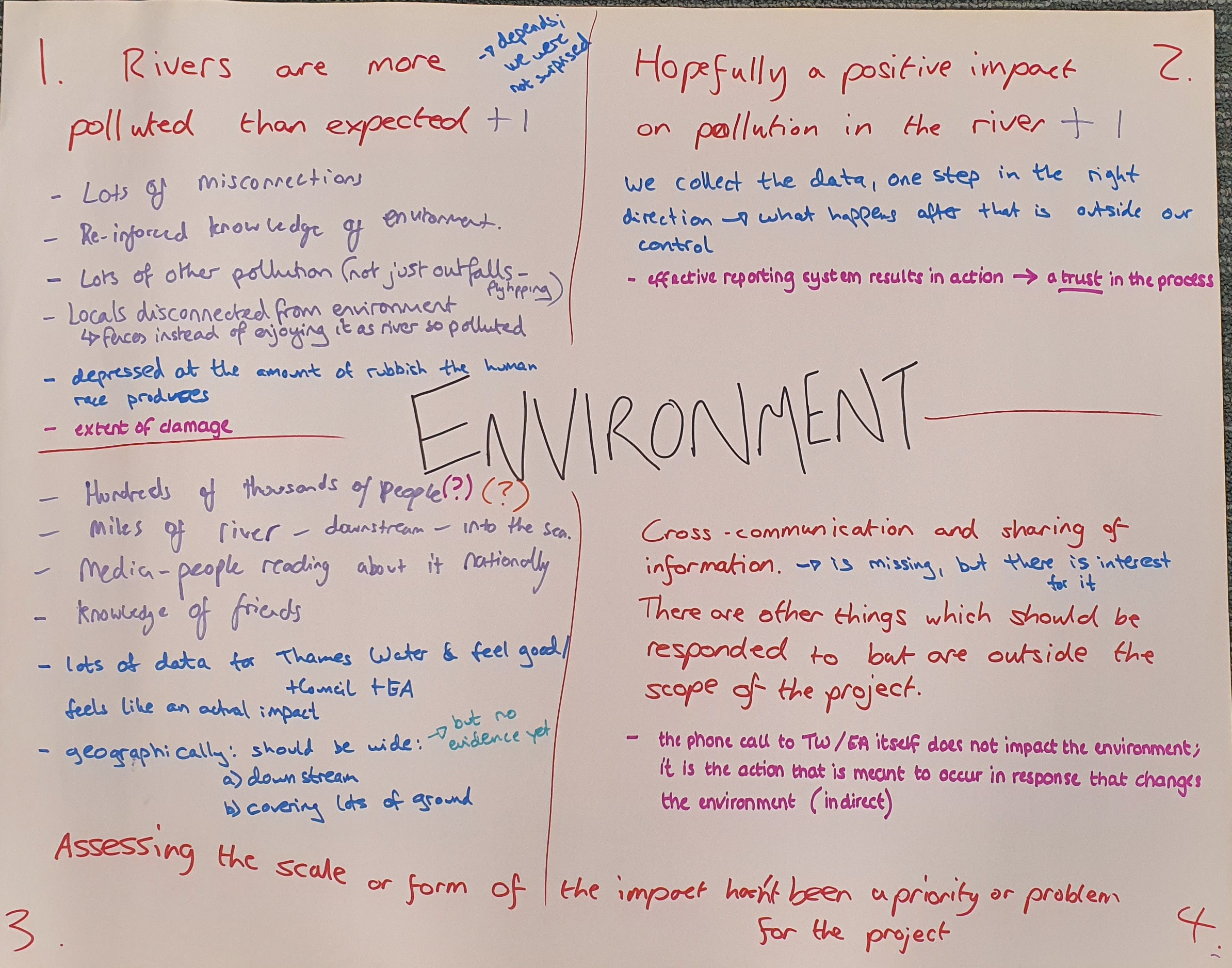
“We learnt about pollution in our rivers and this is an environmental concern, however, the action of collecting data does not immediately impact the ENVIRONMENT, learning about how the data is used from our [citizen] involvement to improve the environment is important”
“Citizen science provides the opportunity to collect scientific data over large spatial and temporal scales supporting SCIENTIFIC discovery and TECHNOLOGY development.”
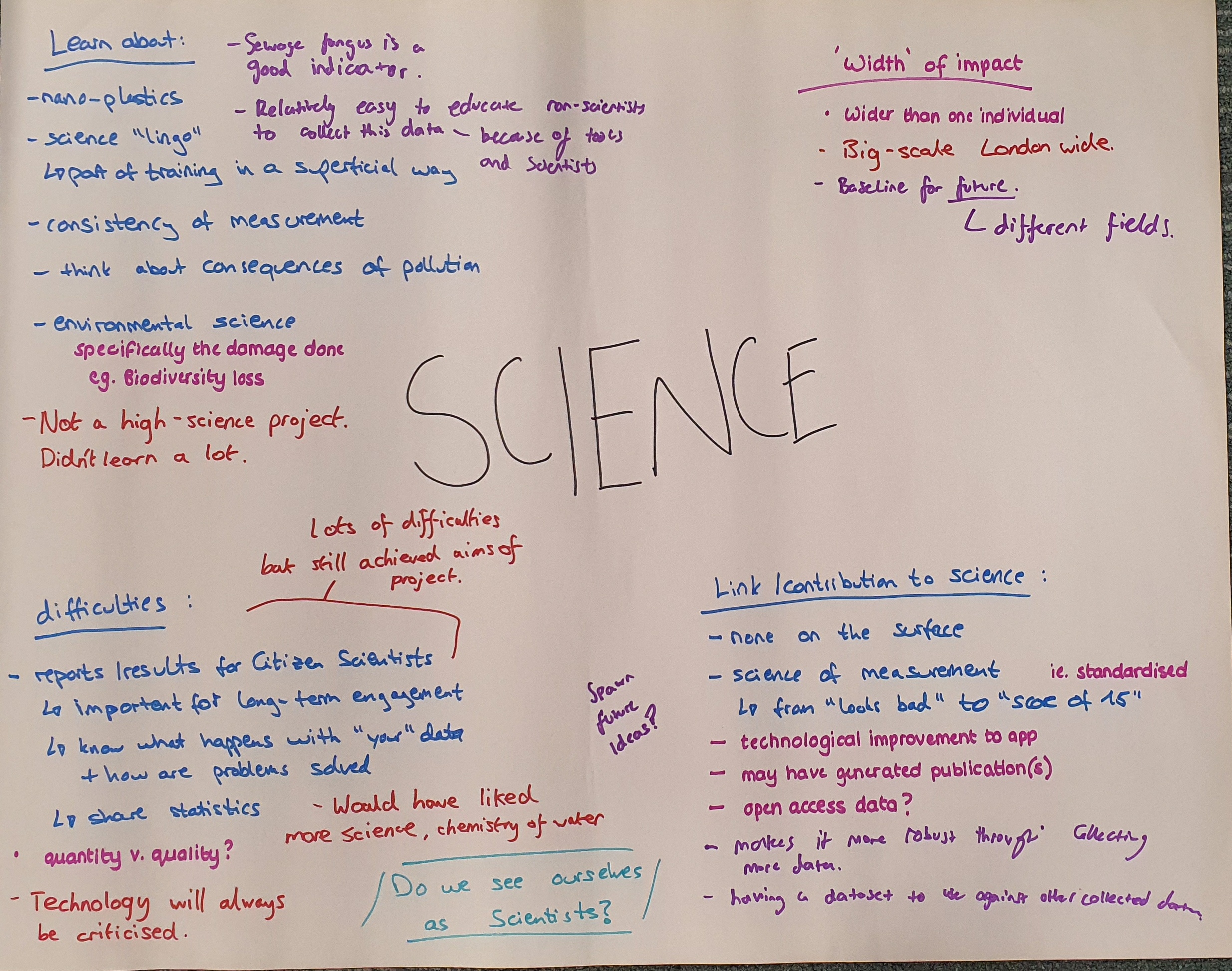
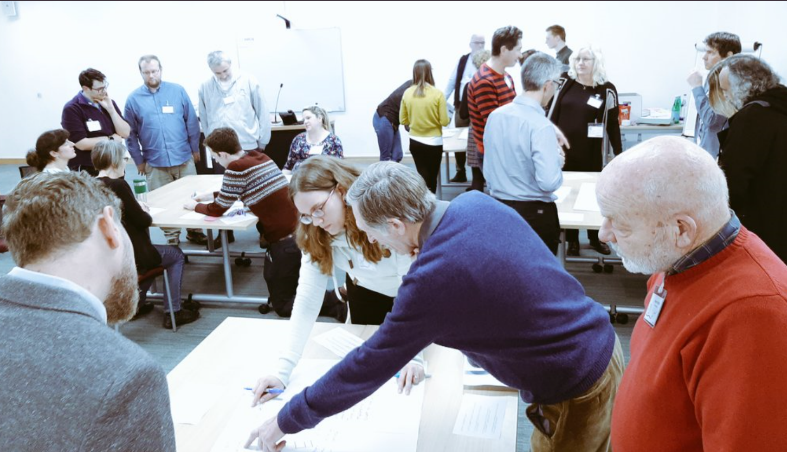
The workshop was a great opportunity to explore impact. The citizen scientists found the session useful and many had not considered their role as ‘impactful’ before. The outputs of this workshop are being used in the development of the MICS method. We would like to thank all the volunteers who came to the workshop!
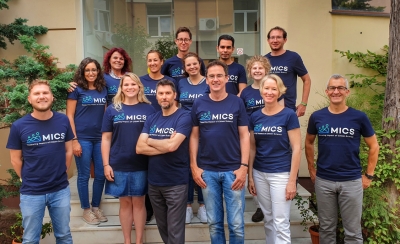
MICS is a new project to measure the impact of citizen science which received two million euros of funding from the European Commission. The project started in January 2019 and involves six European partners from five countries. Luigi Ceccaroni, the project’s Scientific Coordinator, explains the idea behind the project:
To understand the importance of MICS, let's think for a moment about consumers in our current society. If we believe that we are just “consumers”, we focus our attention on “price” and we forget about other issues, for example the ones related to the environment. But when we think of ourselves as citizens, our interests change and we start thinking in a broader way leading us to ask specific questions. How can citizens express their voice on these specific questions? For example, about food. Big and serious questions about food need our attention. What is the relation between the food we eat, the status of the environment, the quality of freshwater? Who decides the food policy or the environmental policy, in Europe or in each of our countries? The answer is maybe some obscure expert easily influenced by the industry lobby. Alongside those experts and interest groups, policymakers should engage citizens and communities (much more than they currently do). And policymakers can only take citizens' views into account if they know what these views are and if people have had a real and meaningful opportunity to define and explore the issues, give voice to their concerns, understand the implications of the decisions they make, and come to terms with the choices required. We need to think afresh about our policies, about our environmental policies, about the food, the water. We need to do it based on evidence and science. The governments, the experts, the citizens, together. This is citizen science. We need to understand its impact; we need to measure it. And then we need to use it. Wisely.
In MICS, we´re working on a toolbox for project leaders, for them to quantify the impact of their projects, and for citizens, for them to understand the impact of their projects. And we already know that we´ll face a challenge – making the toolbox appealing to use. We’ll make the quantification of impact fun, and relevant for every project using the toolbox and, above all, we’ll make it useful for society and policy makers. MICS will not look like a survey from the 90s. We want to make it beautiful, interesting and high-quality.
But, why a toolbox for measuring the impact of citizen science? Everybody already has access to public data on citizen-science projects: there are databases and repositories collecting and sharing these data, and even efforts to standardise them are under way. But impact? The Commission has invested several tens of millions of euros on citizen science in the last seven years, but nobody has a clue of the impact generated by this significant investment. We want to start to quantify this impact and we want everyone to have easy and convenient access to the results. And for these results to be useful, we are working both on the high quality of the MICS toolbox itself and of its content, and on the algorithms analysing the data collected about the projects.
At the moment, the MICS team is about 20 people working part-time on the project. The whole project is paid for by the European Commission. We have small and large national and international institutions and organisations behind us, and above all we have our enthusiasm and passion for citizen science and the environment. We are not independent but, this being a research project, science comes first and pleasing those big institutions is not a necessity.